
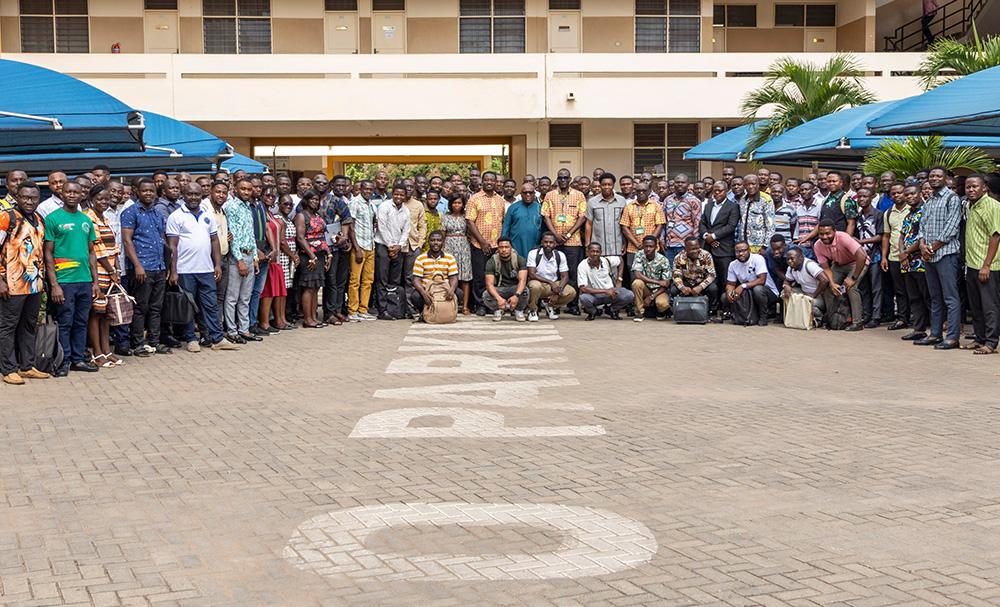
The Ghana Science Association (GSA), Kumasi Branch, has organised an artificial intelligence-themed workshop for science and mathematics teachers from some selected senior high schools in Kumasi to equip them with practical knowledge and insights into the application of artificial intelligence (AI) in STEM teaching and learning.
The two-day programme brought together nearly 200 teachers from thirty-five (35) senior high schools for academic and professional development focused on the future of education and technology.
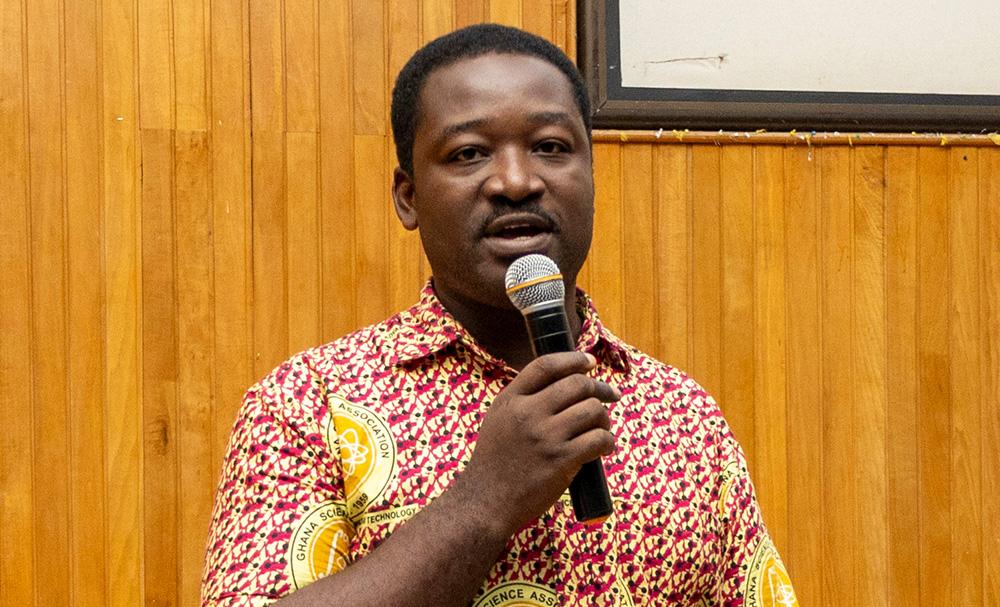
Speaking at the workshop, the Chairman of the 2026 Workshop, Dr Emmanuel Ahene, commended the teachers for their dedication to shaping the minds of the next generation despite challenges in the education system.
“In this room today, we have subject teachers who go to school every day with one mission: to unlock the potential of Ghana’s next generation. You do this with dedication, creativity, and the love for your disciplines, often with limited resources, large class sizes, and competing demands on your time,” he said.
Dr. Ahene noted that the increasing demand for technological skills in education makes it necessary for teachers to embrace emerging tools such as artificial intelligence.
“We are living through one of the most significant technological shifts in human history. Artificial Intelligence, once the subject of science fiction, is now embedded in the tools people use every day: from smartphones to search engines, to the healthcare and financial systems that underpin modern life. And increasingly, it is reshaping how knowledge is created, shared, and learned,” he stated.
According to him, AI presents enormous opportunities for education, particularly in lesson preparation, assessment generation, differentiated instruction, and student support.
“The opportunity is this: AI tools can now help a teacher prepare a well-structured lesson plan in minutes, generate diverse assessment questions, explain complex concepts in multiple ways, create differentiated materials for students at different ability levels, and provide students with on-demand academic support. These are not future possibilities; they are present realities, available today at little or no cost,” he explained.
Dr. Ahene, however, stressed the need for Ghanaian teachers to be equipped with AI knowledge to prevent students from falling behind globally.
“The responsibility is this: if Ghana’s teachers are not equipped to understand and harness these tools, our students will fall behind their peers in countries that have already embraced AI in education. The question is no longer whether AI will be part of education. It already is. The question is whether our teachers will lead that change or be left to respond to it after the fact,” he added.
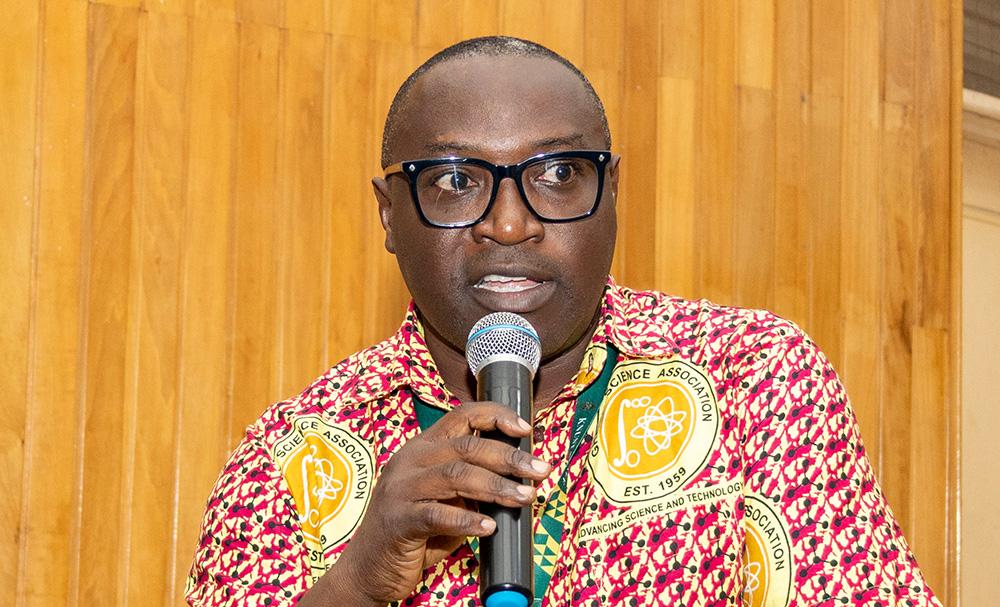
President of the GSA Kumasi Branch, Professor Alexander Kwarteng, also underscored the importance of positioning teachers to adapt to AI-driven changes in the global job market.
“AI has come to stay, and there is a need to position ourselves to align with it,” he noted.
He explained that a significant number of future jobs would be linked to STEM and AI-related fields, making it important for teachers to acquire the necessary knowledge and transfer it to their students.
“In the next six (6) years, by 2032, about 90 per cent of jobs will be STEM and AI-related, so it is important our STEM teachers get acquainted with AI as quickly as possible to impart the relevant knowledge to students,” he said.
Prof. Kwarteng acknowledged that some people have misconceptions about AI but stressed the importance of using the technology responsibly.
“Science at the basic level could be a bit abstract, but today with the advent of AI, the same can be demonstrated, and abstract concepts can be broken down for easy understanding to help students build a strong foundation,” he added.
Former Provost of the College of Science Professor Leonard K. Amekudzi encouraged both teachers and students to embrace AI ethically in order to remain relevant.
“AI has come to stay, and if you use it wisely, you become an efficient and smart teacher, same as students. Else, you will be left behind,” he cautioned.
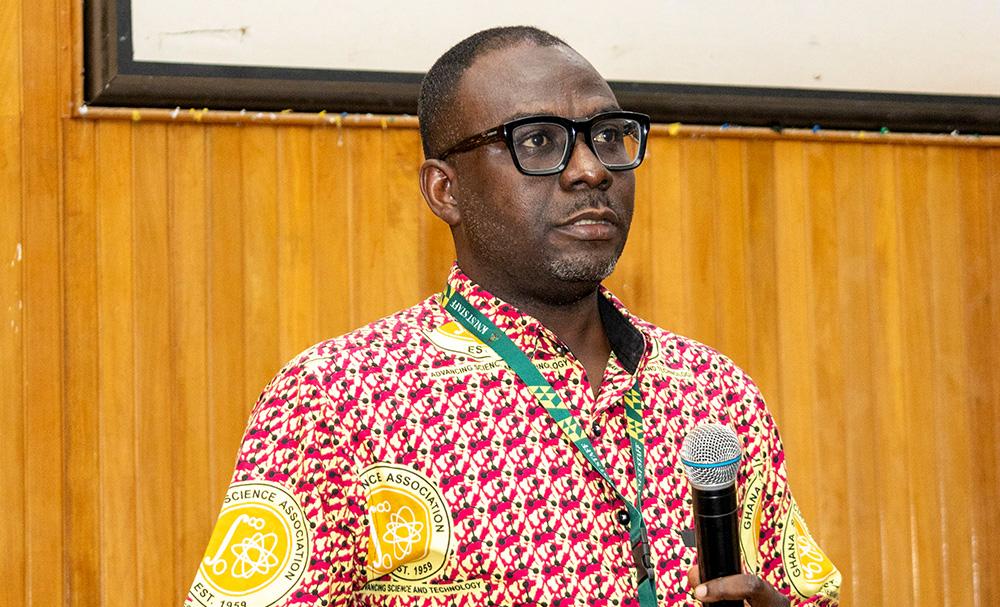
Professor Jacob Agbenorhevi, Head of the Department of Food Science and Technology, KNUST and Former President, GSA Kumasi Branch, expressed excitement about the continuation of the initiatives under the Association and urged participants to join the GSA and contribute to advancing science education in the country.
There were fraternity messages from Mr Albert Frimpong, a representative of the Ghana Education Service (GES), Professor Joseph Abeiku Ackora-Prah, and Professor Reuben Y. Tamakloe of the Department of Physics, KNUST.
The workshop also featured breakout sessions where participants grouped into Physics, Mathematics, Chemistry, Biology, and Information Technology categories, brainstormed and presented proposals on some practical assignments.


